 English
- All
- Product Name
- Product Keyword
- Product Model
- Product Summary
- Product Description
- Multi Field Search
English


Views: 0 Author: Site Editor Publish Time: 2025-11-14 Origin: Site


Choosing the right copy paper cutting machine can make all the difference in your business. Whether you’re running a small office or a large print shop, the right machine boosts productivity and precision. In this article, we will compare automatic and manual paper cutting machines, helping you select the best fit for your needs, budget, and operational goals.
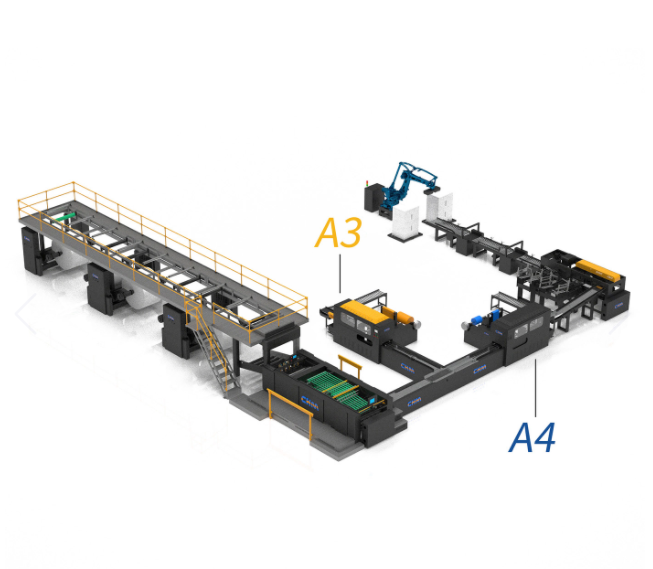
The speed of paper cutting machines is an essential factor in determining the best machine for your needs. Automatic copy paper cutting machines significantly outperform manual models in terms of speed and efficiency. This makes them ideal for businesses that need to process a high volume of paper daily.
Automatic cutters are equipped with motorized mechanisms that allow them to cut through large stacks of paper in a matter of seconds. For example, an automatic machine can easily cut hundreds of sheets in a single cycle, ensuring high productivity with minimal human intervention. This is particularly beneficial in industries like printing, packaging, and law firms, where time is of the essence.
On the other hand, manual paper cutters require the operator to apply force and physically move the cutting mechanism. This process is inherently slower, as it involves lifting and positioning the paper manually before each cut. As a result, manual machines are better suited for lower-volume tasks or situations where speed is not as critical.
| Feature | Automatic Paper Cutter | Manual Paper Cutter |
|---|---|---|
| Speed | High, cuts hundreds of sheets quickly | Low, cuts fewer sheets per cycle |
| Efficiency | High, reduces labor and time | Low, requires manual effort |
| Ideal Use | High-volume businesses | Small-scale or occasional tasks |
Tip: If your business deals with large quantities of paper daily, an automatic copy paper cutting machine will save you valuable time and labor costs, boosting your operational efficiency. CHM's high-speed paper cutting machines are designed to handle large volumes of paper with ease, providing top-notch performance and reducing downtime.
Precision and accuracy are paramount when selecting a copy paper cutting machine, particularly for businesses involved in professional printing or packaging. In this regard, automatic paper cutters have a significant edge over manual models.
Automatic machines utilize advanced technologies such as laser guides, digital controls, and programmable settings to ensure that every cut is precise and consistent. The ability to input exact measurements and have the machine perform the cutting with minimal human intervention means that the results are highly accurate. This is crucial for industries that require exact dimensions, such as graphic design, printing houses, and packaging companies, where any error can lead to waste and higher costs.
In contrast, manual cutters rely on the skill and attention of the operator. While skilled operators can achieve fairly accurate cuts, manual machines often struggle with consistency, especially when cutting through thicker stacks of paper. Human error can also lead to variations in each cut, affecting the quality of the final product.
| Precision Factor | Automatic Paper Cutter | Manual Paper Cutter |
|---|---|---|
| Accuracy | High, ensures uniform cuts every time | Moderate, depends on operator skill |
| Technology | Laser guides, digital controls | Manual adjustments by operator |
| Ideal Use | Professional printing, packaging | Simple or detailed tasks requiring control |
Safety is a crucial consideration when working with cutting machines. Many automatic paper cutters come with built-in safety features that help prevent accidents and injuries. These machines are equipped with safety shields, sensors, and emergency stop buttons, which stop the cutting process if an obstruction is detected. Such features protect the operator from coming into direct contact with the blade, reducing the risk of injury, especially in high-volume environments.
Automatic machines are designed with these safeguards to ensure that even in fast-paced settings, operators are protected from harm. Additionally, modern automatic cutters are equipped with features like automatic clamping, which prevents paper from shifting during the cutting process, further enhancing safety.
In contrast, manual paper cutters put the operator in direct contact with the cutting mechanism. Although they can be safe when used properly, the risk of injury is higher because the operator has to physically maneuver the blade to cut the paper. A momentary lapse in attention can result in accidents, especially when cutting thick paper stacks.
| Safety Feature | Automatic Paper Cutter | Manual Paper Cutter |
|---|---|---|
| Safety Guards | Yes, shields and sensors | No, operator is exposed to blade |
| Emergency Stop | Yes, automatic shutdown if obstruction | No automatic safety features |
| Operator Protection | High, minimal direct blade interaction | Low, operator handles blade directly |
One of the primary reasons businesses choose manual paper cutting machines is the lower initial cost. Manual machines are significantly more affordable compared to their automatic counterparts, making them an attractive option for smaller businesses or individuals with limited budgets.
For example, manual cutters can range from $50 to $800, depending on the size and features. This price difference is a crucial factor for businesses or offices that need a basic cutting solution without the need for high-speed or high-volume production.
While manual cutters are cheaper, it is important to keep in mind that they are more labor-intensive. The savings in initial cost may be offset by the time and labor required to perform the cutting tasks, particularly when dealing with larger volumes of paper.
Manual copy paper cutting machines are ideal for low-volume cutting tasks or occasional use. Small businesses, home offices, or hobbyists who do not need to process large quantities of paper can benefit from the simplicity and affordability of a manual machine. These cutters are also well-suited for precise cutting of small stacks of paper, photos, and light materials.
For example, businesses that only need to cut small batches of documents or materials once in a while can rely on manual cutters to get the job done. Schools, small offices, and craft workshops are typical environments where manual cutters are sufficient to meet their cutting needs.
Another advantage of manual cutters is the level of control they offer to the operator. With a manual machine, the operator has direct control over the amount of pressure applied to the paper, allowing for more precise and delicate cuts. This level of control is beneficial when cutting fragile materials or working on intricate designs that require extra attention.
For instance, when cutting delicate documents, artwork, or other materials that need to be handled with care, manual cutters give the operator the flexibility to make adjustments during the process. This is not something that automatic paper cutters can easily replicate, as they rely on preset settings for the cutting operation.
For businesses that handle large volumes of paper regularly, an automatic paper cutting machine is the ideal choice. These machines are specifically designed to process large stacks of paper quickly and efficiently, making them perfect for environments where time is of the essence. Whether you're running a print shop, packaging operation, or large office, an automatic machine can significantly boost productivity by cutting hundreds or thousands of sheets in a short amount of time.
For example, in a printing business, where thousands of copies are needed daily, the speed and efficiency of an automatic cutter help ensure that production schedules are met without delays. The faster processing time also helps businesses reduce their reliance on manual labor, freeing up resources for other tasks.
While the initial cost of automatic cutters is higher, they offer long-term benefits that make them a worthwhile investment for businesses with ongoing cutting needs. Automatic machines can reduce labor costs by automating the cutting process, which saves businesses valuable time and money over time. These machines are designed for high-volume operations, meaning they can handle continuous work without requiring frequent breaks or downtime.
For businesses looking to stay competitive in the long run, investing in an automatic copy paper cutting machine will improve efficiency, reduce errors, and increase overall output. The durability of these machines also ensures that they will remain a valuable asset for many years, providing consistent performance.
The key advantage of automatic paper cutters lies in their advanced features and automation capabilities. Many models come equipped with programmable settings, digital controls, and touch screens that simplify the cutting process. These features allow users to input exact cutting dimensions, select pre-set cutting sequences, and even program multiple jobs for consistent results.
For businesses that require frequent cutting of large stacks of paper with varying specifications, these features can save time and reduce the likelihood of errors. The ability to program custom cutting sequences also allows for greater versatility, making automatic machines an invaluable tool for businesses that need to meet diverse customer requirements.
The initial cost of a manual paper cutting machine is much lower than that of an automatic cutter. Manual machines typically range from $50 to $800, depending on the size and features. On the other hand, automatic machines can range from $2,000 to $30,000, with high-end models offering advanced features like programmable settings and digital controls.
Manual cutters are an affordable option for smaller businesses or those with limited budgets.
Automatic cutters are a larger investment but are ideal for businesses with high-volume cutting needs.
While manual paper cutters come with a lower initial cost, they require more labor and time to operate. This can increase the overall operating cost over time. On the other hand, automatic cutters may have higher maintenance and repair costs, but they reduce labor costs significantly due to their speed and automation.
Manual cutters incur lower ongoing costs but require more operator involvement.
Automatic cutters may have higher operational costs but can save money through reduced labor and increased productivity.
For businesses with high-volume cutting needs, an automatic paper cutting machine can provide a quicker return on investment. Although the upfront cost is higher, the savings in labor and the increased output make it a worthwhile investment. Businesses can benefit from reduced downtime, faster production, and fewer errors.
Automatic cutters offer a quicker ROI for high-volume environments, making them a better long-term investment.
The cutting capacity of a paper cutting machine determines how many sheets it can handle at once. Manual cutters typically handle up to 50 sheets, while automatic cutters can cut up to 1,000 sheets or more in a single cycle. This difference in cutting capacity makes automatic machines ideal for high-volume businesses, while manual cutters are more suited for low-volume tasks.
Manual cutters are best for smaller tasks, while automatic cutters are designed for high-volume production.
Manual cutters are typically smaller, lighter, and more portable than automatic models. This makes them a better choice for businesses or offices with limited space. Automatic cutters, however, are bulkier and require more space for installation and operation.
If space is limited, a manual paper cutting machine may be the more practical option.
Automatic cutters require more maintenance due to their complex machinery and electronic components. Manual cutters, on the other hand, are simpler in design and generally require less frequent servicing.
Manual cutters are more durable and require less maintenance, making them suitable for low-maintenance environments.
Choosing between a manual or automatic paper cutting machine depends on your business's needs, volume, budget, and precision requirements. A manual cutter is suitable for low-volume, occasional tasks, offering affordability and flexibility. However, for businesses requiring high-speed, high-precision, and high-volume cutting, an automatic cutter provides long-term benefits through efficiency and reduced labor costs. CHM offers high-quality cutting machines that meet various business needs, ensuring improved productivity with tailored solutions and exceptional value for every user.
A: An automatic copy paper cutting machine is faster, more precise, and ideal for high-volume tasks, while a manual cutter is slower but more affordable and suited for low-volume jobs.
A: For high-speed, high-volume cutting, an automatic paper cutting machine is ideal. For occasional, low-volume tasks, a manual paper cutting machine offers flexibility and affordability.
A: Automatic copy paper cutting machines are more expensive upfront but save money on labor over time. Manual machines are more affordable but require more manual labor.
A: Manual copy paper cutting machines are slower and less efficient for high-volume tasks compared to automatic machines. They are better for smaller projects.
A: Automatic copy paper cutting machines provide faster, more precise cuts, reduce human error, and are more efficient for large-scale tasks, making them a better long-term investment.
A: Regular cleaning, sharpening the blade, and checking for wear and tear are key for both manual and automatic copy paper cutting machines to ensure optimal performance.


