 English
- All
- Product Name
- Product Keyword
- Product Model
- Product Summary
- Product Description
- Multi Field Search
English


Views: 0 Author: Site Editor Publish Time: 2025-12-22 Origin: Site


Are you tired of wasting time on paper cutting? Efficient paper cutting is crucial for any office. In this article, we’ll compare the Copy Paper Cutting Machine and guillotine. Discover which tool saves you the most time and boosts productivity in your workplace.
Efficient paper cutting is essential for maintaining a smooth workflow in any office setting. When documents are cut accurately and quickly, it allows employees to focus on their core tasks without interruptions. Imagine a busy office where team members are constantly waiting for paper to be cut manually. This delay can lead to frustration and decreased productivity.
Using the right tools for different paper cutting tasks is crucial. For instance, a Copy Paper Cutting Machine is ideal for high-volume cutting, while a guillotine might suffice for smaller jobs. Here’s a quick comparison of both tools:
Tool Type | Ideal Use Case | Cutting Speed | Accuracy |
Copy Paper Cutting Machine | High-volume tasks | Up to 280 m/min | ±0.2 mm |
Guillotine | Small, manual tasks | 25-50 sheets at once | Varies by user skill |
In a fast-paced environment, having the right equipment makes all the difference. A Copy Paper Cutting Machine not only speeds up the cutting process but also ensures precision, reducing the risk of errors. This means less time spent on rework and more time available for other important tasks.
Moreover, the choice of cutting tool can significantly impact overall office productivity. For example, offices handling large volumes of paperwork, such as print shops or marketing agencies, benefit greatly from automated machines. They can process hundreds of sheets in minutes, allowing staff to dedicate their time to more strategic activities.
In contrast, traditional guillotines, while cost-effective, can slow down operations due to their manual nature. Employees often need to align the paper and make adjustments, which can lead to inefficiencies. Therefore, investing in a Copy Paper Cutting Machine can enhance productivity and streamline workflows, making it a vital consideration for any modern office.
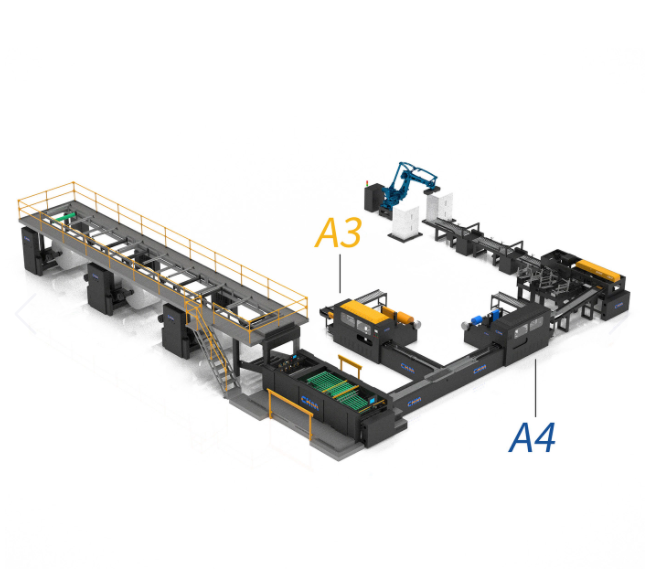
A Copy Paper Cutting Machine is designed to cut paper into specific sizes quickly and accurately. These machines are essential in environments where high volumes of paper need to be processed, such as offices, print shops, and packaging facilities. They can handle various types of paper and are equipped with advanced features to enhance efficiency.
There are several types of copy paper cutting machines available on the market:
● Semi-Automatic Machines: These require some manual input but automate many processes, allowing for faster cutting.
● Hydraulic Machines: These are more robust and can handle thicker paper stocks, making them ideal for commercial use.
● High-Speed Models: Such as the CHM-High Speed A4, designed for maximum output without compromising quality.
Here’s a quick look at the typical features of these machines:
Type | Automation Level | Max Cutting Speed | Ideal Paper Weight |
Semi-Automatic | Moderate | Up to 200 sheets/min | 200-800 GSM |
Hydraulic | High | Up to 300 sheets/min | 200-1000 GSM |
High-Speed (e.g., CHM-High Speed A4) | Very High | Up to 600 sheets/min | 200-1000 GSM |
One of the standout features of a Copy Paper Cutting Machine is its automation and speed. High-speed models, like the CHM-High Speed A4, can cut up to 600 sheets per minute, significantly reducing the time spent on paper processing. This feature is particularly beneficial for businesses that need to meet tight deadlines.
Another critical aspect is precision cutting technology. Many machines utilize twin rotary knife technology, which ensures cutting accuracy of ±0.2 mm. This level of precision minimizes waste and rework, which can be costly in any office environment.
Additionally, these machines can handle a wide range of paper sizes and weights, from lightweight copy paper to heavier cardstock (200–1000 GSM). This versatility makes them suitable for a variety of applications, from standard office tasks to specialized printing jobs.
The benefits of using a Copy Paper Cutting Machine are substantial. First and foremost, they save a significant amount of time compared to manual cutting methods. For example, while a guillotine might take several minutes to cut a batch of paper, a cutting machine can accomplish the same task in seconds.
Moreover, the consistency and accuracy of cuts are major advantages. With a cutting accuracy of ±0.2 mm, businesses can trust that their documents will have clean edges, which is essential for professional presentation.
Finally, these machines reduce labor effort and physical strain on employees. By automating the cutting process, workers can focus on more strategic tasks rather than repetitive manual labor. This shift not only enhances productivity but also contributes to a healthier work environment.
A guillotine cutter is a manual or electric device used to cut paper into straight lines. Its design features a large, flat surface where the paper is placed, and a sharp blade that is lowered to make precise cuts. This tool is commonly found in offices, schools, and print shops, where it serves various cutting needs.
There are several types of guillotine cutters available, each suited for different tasks:
● Manual Guillotine Cutters: These require the user to apply force to lower the blade. They are ideal for small tasks and are often more affordable.
● Electric Guillotine Cutters: These machines automate the cutting process, allowing for faster operation. They are better suited for high-volume cutting needs, such as in printing businesses.
Type | Operation | Ideal Use Case | Cutting Capacity |
Manual Guillotine Cutter | Manual | Small offices or personal use | 25-50 sheets at once |
Electric Guillotine Cutter | Automated | High-volume printing or copying | 50+ sheets at once |
One of the main features of guillotine cutters is their operation type. Manual options require physical effort, while electric models provide ease of use with the push of a button. This distinction is crucial for offices that prioritize speed and efficiency.
However, guillotines do have limitations. Typically, they can only cut 25 to 50 sheets at a time, which may not be sufficient for larger tasks. This restriction can slow down productivity, especially in busy office environments where time is of the essence.
When considering a guillotine cutter, it’s essential to weigh the pros and cons.
● Cost-Effectiveness: Guillotine cutters are generally less expensive than automated cutting machines, making them accessible for small businesses or occasional use.
● Simplicity: They are easy to operate, requiring minimal training. This makes them suitable for users of all skill levels.
● Time-Consuming: Manual operation can slow down the cutting process, especially when handling large volumes of paper.
● Potential for Inaccuracies: If not aligned correctly, cuts can be uneven, leading to wasted materials.
● Physical Strain: Regular use of manual guillotines can lead to fatigue or strain injuries, particularly for those cutting large batches frequently.
In summary, while guillotine cutters offer affordability and straightforward functionality, they may not be the best choice for all office environments. Businesses needing high efficiency and precision might find that a Copy Paper Cutting Machine better suits their needs.
When it comes to cutting efficiency, the Copy Paper Cutting Machine significantly outperforms traditional guillotine cutters. For instance, high-speed machines like the CHM-High Speed A4 can cut up to 600 sheets per minute. In contrast, a typical guillotine can handle around 25 to 50 sheets at once, depending on the model and user skill.
The batch processing capabilities of these machines greatly influence overall time savings. For example, if you need to cut 500 sheets, a Copy Paper Cutting Machine can complete this task in just a couple of minutes. Here’s a quick comparison of the time taken by both tools:
Tool Type | Cutting Speed | Time to Cut 500 Sheets |
Copy Paper Cutting Machine | Up to 300 sheets/min | Approximately 2 minutes |
Guillotine | 25-50 sheets at once | Approximately 20 minutes |
This stark difference highlights how much time can be saved by using a more efficient cutting machine.
Precision is another critical factor when comparing these tools. The Copy Paper Cutting Machine typically offers a cutting accuracy of ±0.2 mm, which means fewer errors and less need for rework. On the other hand, guillotines can have a higher rate of inaccuracies. Studies indicate that 10-15% of cuts made with a guillotine may require re-trimming due to misalignment or user error. This not only wastes time but also increases paper waste.
The user experience varies significantly between the two tools. Using a Copy Paper Cutting Machine often involves minimal manual adjustments, thanks to its automated features. This makes it user-friendly and reduces the learning curve for new employees. In contrast, guillotines require careful manual alignment and force to operate, which can be physically demanding over time.
The physical demands of using these tools also differ. While a guillotine cutter can lead to fatigue from repetitive motions, a Copy Paper Cutting Machine minimizes physical strain. Operators can engage in other tasks while the machine efficiently handles large volumes of paper. This shift not only improves productivity but also contributes to a healthier work environment.
In conclusion, the time efficiency, precision, and user experience associated with Copy Paper Cutting Machines make them a superior choice for offices looking to optimize their paper cutting processes.
Copy Paper Cutting Machines are invaluable in various office settings, particularly in high-volume environments. For example, print shops and commercial operations rely heavily on these machines to handle large batches of documents efficiently. These machines can cut hundreds of sheets in minutes, making them ideal for businesses that require quick turnaround times.
Industries such as packaging and publishing significantly benefit from automated paper cutting. In packaging, precise cuts are essential for creating boxes and labels that fit perfectly. Automated machines ensure consistency and speed, reducing waste and improving overall productivity. Similarly, in the publishing sector, where large volumes of printed materials are produced, a Copy Paper Cutting Machine streamlines the process, allowing for rapid production without sacrificing quality.
Industry | Benefits of Automation | Typical Volume Needs |
Packaging | Consistency and precision in cuts | High-volume, varied sizes |
Publishing | Fast production and minimal rework | Large batches of printed sheets |
Print Shops | Quick turnaround and high output | Hundreds of sheets daily |
While Copy Paper Cutting Machines are excellent for high-volume tasks, there are scenarios where a guillotine cutter may be more suitable. For small businesses or those with limited budgets, manual guillotines offer a cost-effective solution for occasional use.
Guillotine cutters work well in situations where the volume of paper cutting is low. For instance, a small office that occasionally needs to trim a few sheets for presentations or reports may find a manual guillotine sufficient. They are also useful for craft projects or when working with different paper sizes that require manual adjustments.
Scenario | Reason for Using Guillotine | Budget Considerations |
Small office tasks | Limited volume and infrequent use | Lower initial investment |
Craft projects | Versatility for various paper sizes | Cost-effective for occasional needs |
Personal use | Simple and easy to operate | No need for expensive machinery |
In these cases, the simplicity and lower cost of a guillotine cutter make it an attractive option. However, for businesses aiming to enhance efficiency and handle larger volumes, investing in a Copy Paper Cutting Machine is often the better choice.
Choosing between a Copy Paper Cutting Machine and a guillotine depends on your office's needs.
For high-volume tasks, the Copy Paper Cutting Machine excels in speed and efficiency.
In contrast, guillotines are cost-effective for smaller jobs.
Consider your office size, cutting volume, and budget before deciding.
Assessing specific needs will help you make the best choice for your workflow.
A: The cost of a copy paper cutting machine ranges from $300 for entry-level models to over $3,000 for high-end machines.
A: Regular maintenance includes cleaning blades, checking alignment, and lubricating moving parts to ensure longevity.
A: Guillotine cutters are limited to about 25-50 sheets at a time, making them less efficient for high-volume tasks.
A: Essential safety features include blade guards, emergency stops, and safety interlocks to prevent accidents.
A: Yes, some manufacturers focus on sustainability, offering machines made from recycled materials and energy-efficient designs.


