 English
- All
- Product Name
- Product Keyword
- Product Model
- Product Summary
- Product Description
- Multi Field Search
English


Views: 0 Author: Site Editor Publish Time: 2026-02-04 Origin: Site


In the fast-paced world of manufacturing, precision and efficiency are essential for staying competitive. One area where these elements are crucial is the paper cutting process. Whether it’s cutting large rolls of paper, labels, or sheets, the precision of the cut plays a pivotal role in the final product quality, the speed of production, and overall factory efficiency. High precision paper cutting machines can help factories achieve these objectives, but only if they are used properly and optimized for the specific needs of the production line. This article will explore how to improve factory production line efficiency with high precision paper cutting machines, avoid cutting errors, and increase productivity while reducing waste.
Paper cutting is a fundamental part of various industries, including packaging, printing, and labeling. Whether you’re producing printed materials, labels for consumer goods, or paper products for industrial use, the quality and accuracy of the cuts directly impact product quality, material waste, and manufacturing costs. Here’s why precision paper cutting is so critical for factories:
Reduced Waste: Inaccurate cuts lead to more waste material, which increases costs and decreases profitability. High precision reduces this issue.
Improved Quality: Precise cuts ensure the integrity of the paper products, resulting in higher-quality products that meet industry standards.
Faster Production: With high precision, the cutting process becomes more efficient, allowing for faster throughput and less downtime, ultimately improving overall factory efficiency.
High precision paper cutting machines utilize advanced technologies to achieve accurate cuts, whether through manual operation or fully automated systems. They typically rely on:
Laser Cutting: Laser cutting technology offers high accuracy, especially for intricate cuts. It ensures clean, precise edges without the risk of paper damage.
Rotary Blades: These are used in many industrial paper cutting machines, offering fast, efficient, and precise cutting for large volumes of paper.
Guillotine Systems: This traditional cutting mechanism is still highly effective for large batch cuts, ensuring uniformity across multiple layers of material.
The accuracy of these machines depends on factors like blade sharpness, system calibration, and machine settings. For factories that rely on continuous and high-volume paper cutting, regular maintenance and tuning are essential to maintain precision and avoid errors.
| Technology | Key Features | Best Use Case |
|---|---|---|
| Laser Cutting | Clean, precise cuts for intricate details | Complex, detailed cuts |
| Rotary Blades | Fast, efficient, precise for high volumes | High-volume cutting |
| Guillotine Systems | Uniform cuts, can handle multiple layers | Large batch cuts in industrial settings |
Several factors significantly influence the performance of paper cutting machines. Precision and overall efficiency can be heavily impacted by these factors, so it’s important to understand them and address any challenges. By optimizing these factors, manufacturers can reduce errors, increase productivity, and improve the quality of their paper products. Let’s dive into the key factors that affect paper cutting precision and efficiency:
One of the most crucial aspects of maintaining high precision in paper cutting is ensuring that the blades are in excellent condition. Over time, blades can wear down and become dull, leading to inconsistent cuts, ragged edges, and even damage to the material. Dull blades require more pressure to cut through the paper, which can lead to paper tearing or causing frayed edges. Additionally, improperly sharpened blades can cause uneven cuts, which result in product defects.
Importance of Regular Blade Maintenance
To ensure consistently clean, straight cuts, regular maintenance is essential for keeping the blades sharp. Dull blades not only lead to poor quality but also cause unnecessary wear on the cutting machine.
Choosing the Right Blade
Additionally, using the correct type of blade for the material being cut is critical. Paper types vary in thickness, texture, and coatings, and each type of paper may require a specific blade.
Even the best paper cutting machines can make errors if they are not properly calibrated. Misalignment or inaccurate settings can result in cuts that are not straight, or misaligned with the design, negatively impacting product quality and production efficiency. Whether the machine is manual or automated, proper calibration is essential to guarantee that it works at peak performance.
Regular Calibration is Essential
Over time, cutting machines can drift out of alignment due to factors such as heavy use, mechanical shifts, or environmental changes (e.g., temperature or humidity). Periodic checks of machine calibration can ensure that all components are aligned and functioning as they should. When machines are properly calibrated, the cuts will be accurate and the production process will run more smoothly.
Automated Calibration Features
Some modern high precision paper cutting machines come with automated calibration features that reduce the likelihood of human error. These advanced machines can adjust themselves to ensure that cutting parameters remain within the required specifications.
The type and quality of the paper being cut are essential factors that directly affect the precision of the cuts. Paper materials can vary in thickness, texture, and coating, and understanding these characteristics is crucial when setting up a paper cutting machine for optimal performance. For example, thinner materials like tissue paper are more delicate and prone to tearing under pressure, while thicker cardstocks or corrugated materials may require more force to cut properly.
Adjusting for Different Materials
When cutting different types of materials, it’s important to adjust the machine’s settings accordingly. For softer materials, less pressure should be applied to avoid tearing, while harder materials might require higher cutting force.
Material Consistency
In addition to understanding the material's physical properties, ensuring consistency in the material supply is also key to reducing cutting errors. Variations in paper thickness, density, or texture can affect the accuracy of the cut. By sourcing high-quality, consistent materials, manufacturers can reduce issues related to cutting irregularities and maintain a steady production flow.
A well-trained operator plays a pivotal role in ensuring that high precision paper cutting machines run smoothly. Even the most sophisticated machines will underperform without proper handling. Operators need to be familiar with machine functions, settings, and maintenance procedures. A skilled operator can adjust the machine for various materials, identify issues before they escalate, and carry out maintenance tasks efficiently.
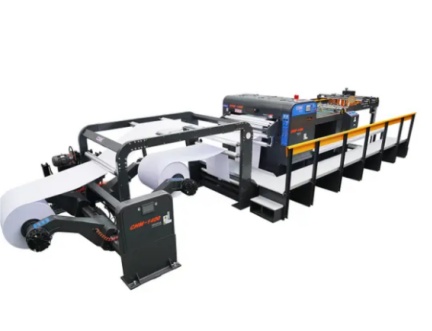
Precision paper cutting machines reduce the need for frequent adjustments and rework, which means faster production times and improved throughput. Automated machines, in particular, allow for a seamless production flow, reducing the time between cutting and packaging. For factories with high output demands, faster cutting speeds directly translate into higher production rates and lower operational costs.
Precision cutting machines ensure that every product is made to the exact specifications, improving the overall consistency of the product line. This consistency leads to fewer defects and a better customer experience. Whether it's cutting printed materials for packaging or labels, customers expect uniformity, which high precision machines help deliver.
High precision reduces the amount of wasted material that occurs from inaccurate cuts. In industries where raw material costs can be high, reducing waste through precision cutting can significantly cut costs, improve profit margins, and help the environment by reducing the amount of scrap material.
By investing in high precision cutting machines, you are investing in the long-term reliability of your production line. Machines that operate smoothly without frequent breakdowns or need for recalibration lead to less downtime and lower maintenance costs over time.
High precision paper cutting machines have become a fundamental part of modern factory production lines. With advancements in technology, these machines not only increase cutting speed but also ensure high-quality, consistent products. By reducing errors, minimizing waste, and improving efficiency, they directly contribute to increased productivity and profitability.
For manufacturers looking to improve their paper cutting processes, investing in high precision machines is a critical step towards improving both performance and quality. At Dong Guan Chun Hing Mechanical Technology Co., Ltd., we provide state-of-the-art cutting machines designed for maximum efficiency and reliability. Whether you need to upgrade your existing equipment or invest in new technology, our solutions can help you optimize your production line for better performance.
1. What is the difference between a high precision paper cutting machine and a regular paper cutting machine?
High precision machines provide more accurate cuts with minimal errors. They are often automated and have advanced settings for different materials, resulting in uniformity and reduced waste.
2. How does high precision cutting impact product quality?
High precision ensures that every product is cut to the exact specifications, improving consistency and meeting customer expectations. It reduces defects and ensures the final product meets industry standards.
3. What are the benefits of automated paper cutting machines?
Automated paper cutting machines increase efficiency, reduce labor costs, and improve cutting speed. They ensure precision, reduce human error, and enhance overall productivity.
4. Why is machine calibration important in paper cutting?
Calibration ensures that the cutting machine operates at optimal performance, producing precise and accurate cuts. Regular calibration helps prevent mistakes and ensures consistent product quality.


