 English
- All
- Product Name
- Product Keyword
- Product Model
- Product Summary
- Product Description
- Multi Field Search
English


Views: 0 Author: Site Editor Publish Time: 2025-07-25 Origin: Site


Printing businesses are constantly looking for ways to boost efficiency and reduce costs. How can you meet growing demands without sacrificing quality? High-speed paper sheeting machines are designed to address this challenge. These machines automate the cutting process, significantly increasing production speeds and reducing manual labor. In this post, we’ll explore how high-speed paper sheeting machines work, their role in enhancing productivity, and why they’re essential for modern printing operations.
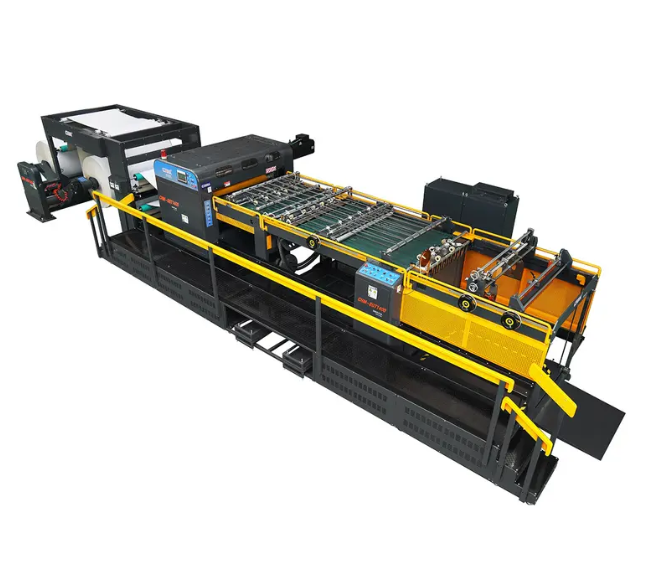
High-speed paper sheeting machines are revolutionizing the printing industry by increasing efficiency and precision. Here’s how:
Automation of Paper Cutting
High-speed machines automate the cutting process, allowing for continuous production without manual intervention. This leads to a significant boost in output.
High-Speed Operation
These machines can operate at speeds up to 21,000 sheets per hour, greatly improving the rate at which paper is processed.
Reduced Downtime
Automatic reelstands minimize downtime during reel changes, allowing for seamless operations and uninterrupted production.
High Precision in Cutting
These machines provide precise cuts, ensuring that all sheets are uniform in size, which is critical for quality printing.
Clean Cuts
The cutting mechanisms create smooth, clean cuts, leaving minimal burrs and waste behind, leading to less material waste and smoother printing.
Versatility in Material Handling
From thin papers to thick cardboard, high-speed sheeting machines can handle a wide variety of materials, ensuring adaptability for different types of print jobs.
Reduced Labor Costs
By automating the cutting process, businesses can cut down on the need for manual labor, reducing overall labor expenses.
Material Optimization
These machines minimize material waste by making precise cuts, ultimately lowering material costs.
Faster Turnaround Times
The speed of these machines allows for quicker order fulfillment, improving customer satisfaction and allowing businesses to meet tight deadlines.
High-speed paper sheeting machines are built to optimize efficiency and precision. Let’s dive into the key components that make them work:
The infeed system is responsible for unwinding paper rolls and feeding them into the machine. It ensures the paper moves smoothly, without wrinkling or creasing, which is essential for clean cuts.
Blade Cutting: Sharp blades cut through the paper in straight, clean lines. It’s ideal for medium to thick papers.
Laser Cutting: Laser cutters provide precision and work well with various paper thicknesses, leaving a clean edge with minimal waste. This method is highly efficient for intricate cuts.
The delivery system involves a conveyor that stacks and collects the cut sheets. It transports the sheets to the next phase of processing, ensuring they’re aligned and ready for use.
Modern machines use computerized control systems to monitor and adjust cutting size, speed, and position. This tech ensures consistent, accurate cuts every time, even under high-speed conditions.
High-quality knives are critical to ensuring smooth, accurate cuts. These knives maintain sharpness over time, reducing maintenance needs and minimizing downtime, which leads to more efficient production.
Automation plays a pivotal role in enhancing the efficiency of high-speed paper sheeting machines. Here’s how it impacts paper sheeting operations:
Automation reduces the need for manual intervention in the cutting process, which decreases the chance of mistakes. It helps maintain a steady workflow, ensuring that paper is cut consistently and at a high speed.
Reelstands: Automatic reelstands are essential in optimizing machine operations. They automatically adjust, minimizing downtime during reel changes. This ensures continuous production, reducing delays and increasing overall output. By integrating automation, high-speed paper sheeting machines can work faster and more reliably, allowing businesses to meet growing demands efficiently.
What are the Automation Features in Modern Paper Sheeting Machines?
Automatic paper loading and cutting size adjustments, which contribute to continuous production.
Features designed to reduce operator involvement, such as automatic cleaning and error detection mechanisms.
High-speed paper sheeting machines come in different types, each suited for specific needs and industries. Let’s explore the options:
These machines are designed for continuous production, efficiently cutting large paper rolls into sheets. They are ideal for high-volume production environments, where speed and consistency are crucial.
Traditional sheeting machines, while still common, tend to be slower and require more setup time compared to roll-to-sheet cutters. They are typically used for lower-volume operations but may not offer the same level of speed and efficiency as modern machines.
In printing, these machines cut printed paper rolls into standardized sheets, ensuring precise sizes for various printing processes. They help meet the demands of high-speed printing.
These machines are used to cut large paper rolls into the required size for packaging materials. They ensure consistency and speed, important for mass production.
High-speed sheeting machines are essential in the office supplies industry. They produce paper sheets for common uses like printing, copying, and other office-related tasks.
These machines also play a key role in the production of paper products such as paper bags, boxes, and other paper-based items. They help streamline production and increase efficiency in the manufacturing process.
High-speed paper sheeting machines offer several advantages in terms of cost savings and long-term benefits. Here’s how they help reduce operating costs and boost profitability:
Automation reduces the need for manual labor. With minimal human intervention required, businesses can save on wages and reduce the risk of human error, which can lead to costly mistakes.
Precision cutting ensures that each sheet is sized accurately, minimizing waste. By using fewer materials to produce the same amount of paper, businesses save money on raw materials, lowering overall costs.
Over time, the improved efficiency and precision of high-speed paper sheeting machines lead to lower operational costs. Faster speeds and reduced waste contribute to significant savings in both labor and material expenses.
Automation enhances productivity by allowing machines to operate around the clock, completing more orders in a shorter period. This not only increases revenue but also helps businesses handle higher demand without additional costs. By investing in these machines, companies can optimize their operations, achieve faster turnaround times, and ultimately see a return on investment through long-term savings.
Choosing the right high-speed paper sheeting machine is crucial for optimizing productivity and efficiency. Here are key factors to consider:
Precision is essential to avoid waste and ensure consistent sheet sizes. High accuracy in cutting means you get the most out of your materials, reducing costs and enhancing the quality of your final product.
The machine’s capacity should match your business needs. If your production demands are high, you’ll need a machine that can handle a larger volume of paper without causing bottlenecks or delays.
Machines that are easy to maintain save time and money in the long run. Look for machines with user-friendly maintenance features, such as easy-to-replace parts and minimal downtime for service.
Selecting energy-efficient machines helps minimize operating costs and reduce your environmental impact. Machines with lower energy consumption help cut electricity costs while maintaining optimal performance.
Customization allows you to tailor the machine to your specific needs. Options like ionizing units or automated packages improve efficiency and ensure the machine can handle various production requirements, whether it’s paper type, size, or cutting style.
While high-speed paper sheeting machines offer impressive benefits, there are some common challenges that printing companies may face. Here’s how to address them:
Knife Replacements: Over time, the cutting knives may lose sharpness, requiring replacements or sharpening. Regular inspection of knives ensures they remain effective and efficient.
Control System Calibrations: As machines become more advanced, control systems need periodic calibration. Regular checks prevent system malfunctions and ensure accurate operation.
Reel Changes and Setup Adjustments: Frequent changes in paper rolls or setup adjustments can cause delays. Minimizing these interruptions through automatic reelstands and proper setup can reduce downtime significantly.
Scheduled Maintenance: Set up a regular maintenance schedule to check for worn-out parts, replace blades, and calibrate systems. This helps maintain consistent performance and reduces unexpected breakdowns.
Proper Training: Ensure operators are well-trained to handle the machine’s features, troubleshoot issues, and understand its automated functions. Proper training increases efficiency and reduces mistakes.
As technology continues to evolve, high-speed paper sheeting machines are expected to become even more efficient and smarter. Here's a look at what the future holds:
The next generation of paper sheeting machines will likely incorporate AI-driven features. AI can optimize cutting accuracy and speed, adjusting to different materials and production demands in real time. This means even more precision and fewer errors during the sheeting process.
Technological advancements are making paper sheeting machines more energy-efficient. Future models will use less power to operate while maintaining performance, helping businesses reduce energy costs and lessen their environmental impact.
Automation and Smart Technologies: New machines will integrate smart technologies, like IoT and sensors, to track performance, predict maintenance needs, and improve uptime.
Sustainability Practices: Expect more eco-friendly designs focused on reducing energy consumption and minimizing waste during production. Sustainability will play a significant role in shaping the future of these machines, helping businesses meet both cost and environmental goals.
High-speed paper sheeting machines increase productivity, reduce costs, and improve quality. Their automation and efficiency make them essential for modern printing businesses.
Integrating these machines into your workflow will help businesses stay competitive and adapt to future demands while boosting overall performance.
A: High-speed paper sheeting machines boost productivity, reduce labor costs, and enhance precision, leading to more efficient operations.
A: These machines automate the cutting process, reduce material waste, and optimize energy usage, significantly lowering overall costs.
A: The main types are roll-to-sheet cutters, designed for continuous production, and traditional sheeting machines, suited for lower-volume operations.
A: Automation reduces manual labor, ensures consistent quality, and minimizes downtime, leading to faster production and lower operating costs.
A: Long-term benefits include lower operational costs, increased productivity, and the ability to meet higher production demands efficiently.


